Prescription drug coverage can feel confusing, but understanding how it works inside a Medicare Advantage plan makes it much easier to protect both your health and your budget. Here’s a clear, practical overview of how it works, what it costs, and what to look for when choosing a plan.
What Is Prescription Drug Coverage in Medicare Advantage?
Medicare Advantage plans, also called Part C, bundle your hospital (Part A) and medical (Part B) coverage into one private plan. Most also include prescription drug coverage. When they do, they’re often called MAPD plans (Medicare Advantage Prescription Drug plans).
With an MAPD plan, you use one insurance card for medical care and prescriptions. Private insurance companies run these plans, but they must follow Medicare’s rules.
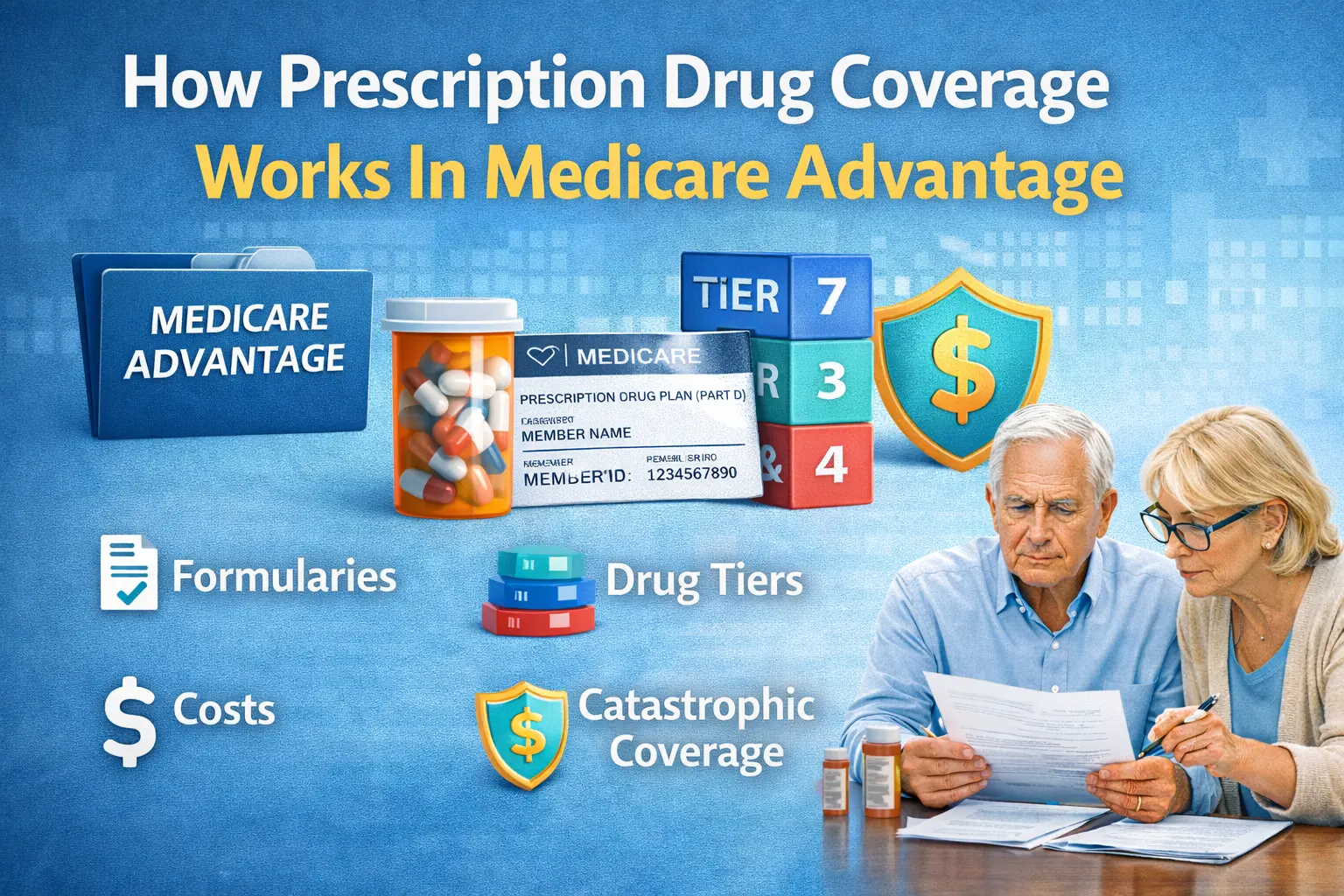
Each plan has its own list of covered drugs, called a formulary. Formularies vary by company, so the medications covered — and what you pay — can differ from plan to plan. If you take regular prescriptions, always check that your specific medications are included before enrolling.
How Medicare Advantage Drug Coverage Works
Here are the key parts that determine how your prescription coverage functions:
Formulary (Drug List)
Every plan has a formulary listing covered medications. Drugs are placed into tiers. Lower tiers typically include generics and cost less. Higher tiers often include brand-name or specialty drugs and cost more.
Pharmacy Network
Plans contract with certain pharmacies. Using an in-network pharmacy keeps costs lower. Many plans also have “preferred” pharmacies that offer even better pricing.
Premiums and Cost Sharing
You pay your plan’s monthly premium (some plans are $0). When you fill a prescription, you’ll usually pay a copay (a fixed amount) or coinsurance (a percentage of the cost).
Restrictions
Some drugs may require prior authorization, step therapy (trying a lower-cost drug first), or have quantity limits.
Understanding these basics makes comparing plans much easier.
Key Features to Review
When comparing Medicare Advantage plans with drug coverage, pay close attention to:
Drug Tiers
Most plans have 5 tiers. Tier 1 and 2 are usually low-cost generics. Higher tiers include more expensive brand-name or specialty medications with higher cost-sharing.
Deductible
Many plans have a calendar year-based drug deductible you must meet before coverage begins; in many cases, the deductible only applies to brand name drugs.
Preferred Pharmacies
Preferred pharmacies can significantly reduce out-of-pocket costs compared to standard network pharmacies.
Mail-Order Options
Many plans offer 90-day mail-order prescriptions, often at a discount. This can save money and reduce pharmacy trips.
How Drug Costs Are Determined
What you pay depends on several factors:
- The specific plan you choose
- The tier assigned to each drug
- Whether your pharmacy is preferred
- Whether you’ve met your deductible
Always check your exact medications at your preferred pharmacy before enrolling. Looking at “average costs” is not enough — your personal list matters most.
The Three Coverage Stages
Most Medicare prescription drug coverage follows three stages during the year:
1. Deductible Stage
If your plan has a deductible, you pay 100% of drug costs until you meet it. Some plans exclude lower-tier generics from the deductible.
2. Initial Coverage Stage
After meeting your deductible (if applicable), you pay copays or coinsurance for each prescription. The plan pays the rest.
3. Catastrophic Coverage
In 2026, once your out-of-pocket drug costs reach $2,100 for covered medications, you pay $0 for the rest of the year. This cap provides meaningful protection for those with high prescription costs.
Most people never reach catastrophic coverage, but it’s important protection if you take expensive medications.
Questions to Ask Before Choosing a Plan
Don’t choose a plan based on premium alone. Instead, review:
- Are all your prescriptions on the formulary?
- What tier are they in?
- What will you pay at your preferred pharmacy?
- Does the plan have a deductible?
- Are any of your drugs subject to prior authorization or step therapy?
- Does mail order save you money?
Using the Medicare Plan Finder on Medicare.gov is helpful. Even better is having a licensed specialist run a personalized comparison using your actual medication list.
Frequently Asked Questions
Do all Medicare Advantage plans include drug coverage?
Most do, but some do not; always confirm prescription coverage is included before enrolling.
Can I add a standalone Part D plan to my Medicare Advantage plan?
If your Medicare Advantage plan includes drug coverage, you cannot add a separate Part D plan. Enrolling in one could automatically disenroll you from your Medicare Advantage plan and return you to Original Medicare.
Certain MA plans without drug coverage, such a Private-Fee may be able to add a standalone Part D plan.
Will I pay more if I take many medications?
Possibly. Costs depend on your plan’s tiers and where you are in the coverage stages. However, the $2,100 out-of-pocket cap in 2026 limits annual spending on covered prescriptions.
Tips for Saving Money
Review Plans Annually
Formularies and costs change each year. A plan that worked well last year may not be the best option this year.
Ask About Lower-Tier Alternatives
Sometimes a similar medication in a lower tier can significantly reduce costs. Discuss options with your doctor.
Use Preferred or Mail-Order Pharmacies
These often provide the lowest pricing, especially for 90-day supplies.
Check for Assistance Programs
Drug manufacturers and independent foundations sometimes offer patient assistance. Your pharmacist can also help identify savings opportunities.
Consider Generics
Generic medications can offer substantial savings. Always ask if a generic version is available.
Bring a Medication List When Comparing Plans
When reviewing options, have a complete list of your prescriptions, dosages, and preferred pharmacy. This ensures accurate cost comparisons.
Final Thoughts
Medicare Advantage plans with prescription coverage bundle many helpful features into one package, but it pays to do your homework on coverage, drug lists, and total annual costs. Confused or want someone to check your choices? You can always schedule a free, personalized Medicare appointment with Páll Hansen right here. You’ll have a real person walk you through the fine print, which can make a real difference in your peace of mind. Taking a little time now can save you frustration and money in the long run, so don’t be shy about asking for help!