
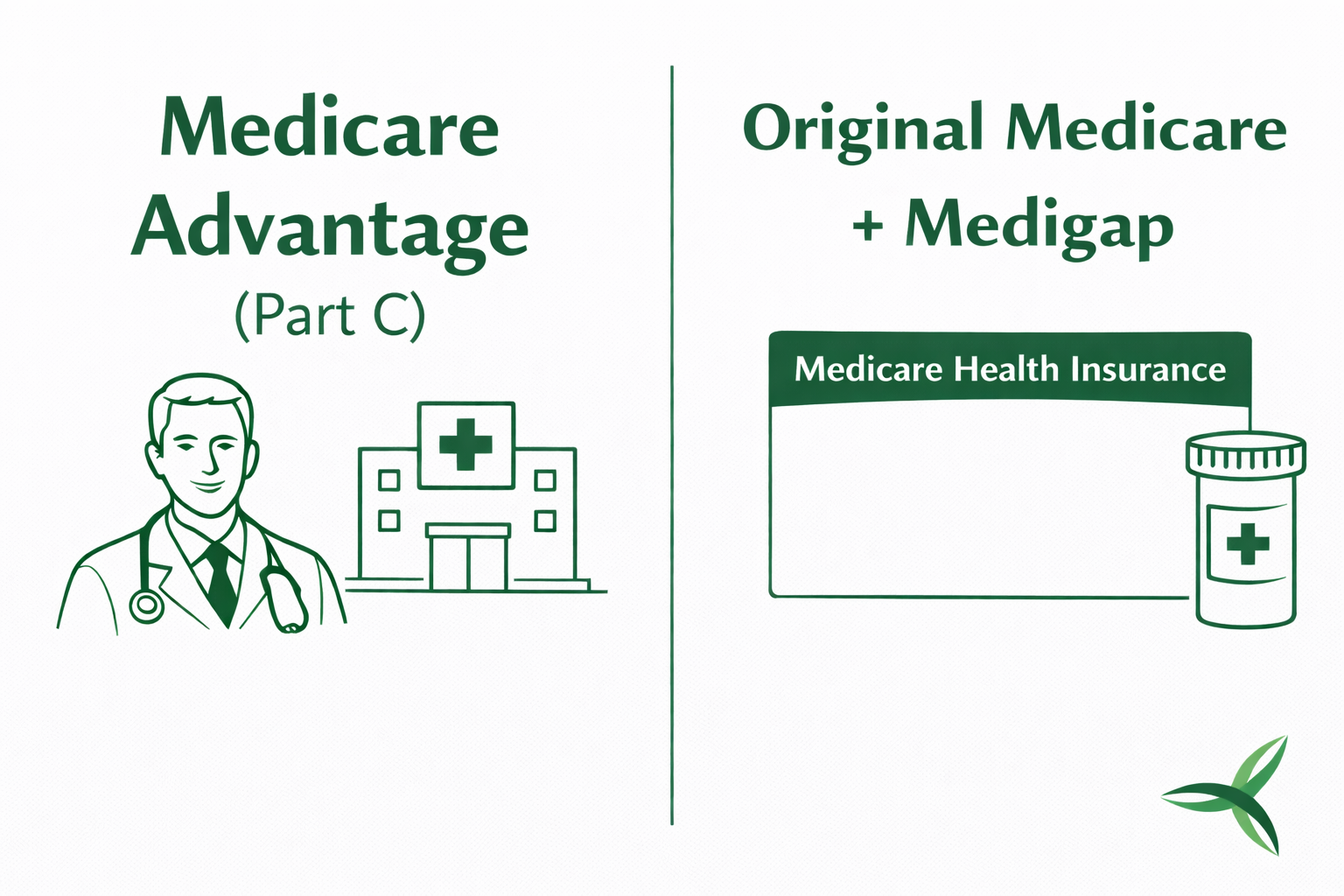
Medicare Advantage vs. Medicare Supplement
Why Is This Comparison Confusing
Medicare has several parts and rules. That alone creates confusion. On top of that, many plan names and terms overlap or sound similar. People often compare costs one way while considering provider access another way. The result is a lot of conflicting information.
Short, clear descriptions are not always available. Advertisements and plan summaries may focus on appealing features rather than straightforward trade-offs. That makes it harder for someone learning the system to distinguish between facts and marketing language.
No Single Best Choice and How to Use This Guide
There is no single choice that fits everyone. Personal health, income, travel habits, and the doctors you prefer will influence which path makes more sense. This content is structured to help you weigh differences without suggesting a single “correct” option.
Read sections that match your needs. Use the comparison part to see concrete contrasts. The parts on common misunderstandings and practical steps offer checks to prevent errors in decision making.
What This Article Will and Will Not Do
This piece explains the differences between Medicare Advantage (Part C) and Medicare Supplement (Medigap). It discusses plan features, cost patterns, provider access, and enrollment rules. The aim is educational: to clarify terms, trade offs, and typical situations.
It will not recommend a specific plan, urge purchase, or guarantee outcomes. It will not replace a conversation with a licensed adviser or a careful review of plan documents.
Two Different Paths to Coverage

What Medicare Advantage Means as Part C
Medicare Advantage is one way to receive your Medicare benefits through private insurers. When you enroll in a Medicare Advantage plan, it covers Part A (hospital) and Part B (medical) benefits. Many plans also include Part D prescription drug coverage.
Plans operate under contract with Medicare and must provide at least the same basic benefits as Original Medicare, though they structure access and cost sharing differently. Types of Medicare Advantage plans include Health Maintenance Organizations (HMOs), Preferred Provider Organizations (PPOs), Private Fee-for-Service (PFFS), and Special Needs Plans (SNPs).
What Medicare Supplement and Medigap Mean
A Medicare Supplement plan, often called Medigap, works alongside Original Medicare to help cover some cost gaps. Original Medicare covers services but leaves beneficiaries responsible for deductibles, copayments, and coinsurance. Medigap policies pay some or all of those out‑of‑pocket costs depending on the plan selected.
Medigap policies are standardized in most states, meaning plans with the same letter designation offer the same basic benefits regardless of the insurer. However, premiums vary by company, location, and underwriting rules.
How Each Option Relates to Original Medicare
Original Medicare is the federal program made up of Part A and Part B. It remains the foundation in both scenarios.
– Choosing Medicare Advantage replaces Original Medicare for your covered benefits; your benefits are delivered through the Advantage plan rather than through Original Medicare.
– Choosing a Medigap plan keeps Original Medicare as your primary coverage and adds secondary coverage for many cost sharing elements.
Both paths interact with Part D prescription drug plans differently. Many Medicare Advantage plans include Part D. Medigap does not include drug coverage, so those who choose Medigap typically buy a separate Part D plan.
Medicare Advantage Explained
How Plans Are Structured and How Enrollment Works
Medicare Advantage plans are run by private insurers that contract with Medicare. Each plan defines covered services, cost sharing, provider networks, and any supplemental benefits. Enrollment generally occurs during specific periods: the Initial Enrollment Period, the Annual Election Period (October 15–December 7), and certain Special Enrollment Periods for eligible life events.
Plan materials include a Summary of Benefits, Evidence of Coverage, and formulary for drugs when Part D is added. These documents explain costs and rules. If you enroll in a Medicare Advantage plan, Medicare pays the plan a fixed amount per member and the plan manages the benefits.
Networks and Provider Choice
Provider access depends on the plan type. HMOs typically require members to use in-network providers and often require a primary care physician (PCP) and referrals for specialists. PPOs generally allow out of network care at higher cost sharing.
Network size varies. Some plans have local, tight networks; others include larger regional systems. Care received outside a plan’s service area may be limited except for emergency or urgent care. Provider choice should be checked against each plan’s provider directory.
Copays, Coinsurance, and Typical Cost Sharing
Cost sharing in Medicare Advantage plans is often a mix of copays and coinsurance. A provider visit, imaging study, or hospital stay may come with fixed copays or a percentage of the billed amount. Insurance companies contract with Medicare regarding the specifics of their plans on a calendar-year basis.
Premiums also are not fixed. Some plans offer $0 monthly premium beyond your Part B premium. Others charge an additional premium. Lower monthly premiums often correspond with higher copays for services.
Prior Authorizations and Utilization Management
Many Medicare Advantage plans require prior authorization for certain services, procedures, or durable medical equipment. Utilization management tools are used to review the medical necessity and appropriateness of care before approval.
These rules can affect the speed of care or the route to specialist treatment. Appeals and grievance processes exist, and Medicare Advantage members have both plan level and Medicare level appeal rights.
Extra Benefits Beyond Original Medicare, Such as Vision, Dental, and Wellness
Original Medicare has limited coverage for vision, dental, and hearing. Many Medicare Advantage plans include added benefits such as routine vision exams, dental cleanings, hearing aid allowances, and fitness program memberships. Amount and availability are on a plan by plan basis.
Extra benefits can be helpful, but they can change year to year and based on the plan. They can also be subject to limits, such as annual maximums or restrictions on provider networks.
Medicare Supplement and Medigap Explained

How Medigap Works Alongside Original Medicare
Medigap policies are designed to cover some cost sharing requirements left by Original Medicare. For example, they may cover the Part A hospital coinsurance, skilled nursing facility coinsurance, or Part B excess charges, depending on the plan letter.
You buy Medigap from a private insurer. Once you have a Medigap policy and Original Medicare, the Medigap policy pays after Medicare processes a claim. Medigap policies do not work with Medicare Advantage plans.
Predictable Costs and Standard Benefit Designs
Medigap plans are helpful for those who value cost predictability. Many standardized plans cover the Part A deductible and Part B coinsurance, which reduces unexpected bills. The most common Medigap plans today are either G or N, with plan F available for those eligible before January 1, 2020.
Provider Flexibility and Out of Network Access
Medigap works with Original Medicare’s provider rules. Where Original Medicare allows a provider to accept assignment, a Medigap policy will pay according to the policy terms. You generally can see any provider who accepts Medicare payments. Referrals are not needed.
This freedom can be an advantage for those who travel or who want access to a particular specialist or hospital that does not participate in a Medicare Advantage network.
The Need for Separate Part D Prescription Drug Coverage
Medigap policies do not include prescription drug coverage. If you have a Medigap plan and want drug coverage, you must enroll in a standalone Part D plan. Failure to enroll in Part D when you are first eligible can lead to penalties later, unless you are eligible for a special enrollment period or other exceptions.
Part D formularies, tiers, and cost structures vary based on the specific plan. When considering Medigap, compare available Part D plans for drug coverage and costs.
Side by Side Comparison of Key Features
Monthly Premiums and Plan Pricing
Medicare Advantage often has lower or zero additional monthly premiums beyond Part B. Insurers may subsidize premiums with higher cost sharing.
Medigap policies usually have higher monthly premiums. That premium is a fixed recurring expense, but often provides broader coverage of out of pocket costs.
The cost tradeoff is the lower monthly premium with variable point of care costs or a higher monthly premium for more predictable per service costs.
Out of Pocket Limits and Overall Cost Exposure
Medicare Advantage plans must have a maximum out of pocket (MOOP) limit for Medicare covered services. Once that limit is reached, the plan pays 100% for Medicare-covered services for the remainder of the year. MOOP amounts vary by plan.
Original Medicare with Medigap has no annual MOOP because Medigap covers many of the cost sharing elements.
Provider Access and Choice
Medicare Advantage networks can limit which providers you may see without paying more. Out of network care may be restricted or expensive unless it is urgent or emergency care.
Medigap with Original Medicare allows you to visit any provider that accepts Medicare. There is more flexibility and there are generally no network restrictions.
Referrals, Prior Authorizations, and Care Coordination
Medicare Advantage plans often use a managed care model. That can be things such as necessary referrals to see specialists, prior authorizations for procedures, and care coordination programs. These elements can help manage costs, but can also add administrative steps to accessing care.
Medigap and Original Medicare do not require referrals for Medicare covered care. Prior authorization for certain services might still be relevant where Medicare has rules, but the managed care overlay is absent.
Travel Coverage and Plans for Stays Outside Your Area
Medicare Advantage benefits typically apply within the plan’s service area. Emergency and urgent care are covered nationwide, but routine care outside the area may not be. Some plans offer temporary out of area coverage or nationwide networks; others do not.
Medigap, paired with Original Medicare, provides more consistent coverage across states since Original Medicare follows you. That can be important for seasonal residents, folks traveling long term, or people with properties in multiple states.
Long-Term Cost Predictability and Plan Changes Over Time
Medicare Advantage plan benefits and costs can change each year. Insurers can adjust networks, copays, benefits, and premiums (within regulatory limits) at open enrollment. Switching between plans is possible during enrollment periods, but may involve new deductibles or differences in networks.
Medigap plans are standardized and less likely to change benefit structures, but premiums can increase. In some cases, insurers may apply medical underwriting outside guaranteed issue windows, which can affect premiums or eligibility.
Both options need annual monitoring. Understanding how each plan might change helps with long term planning.
How People Tend to Evaluate These Options

Some People Prioritize Predictable Costs and Wide Provider Access
Those with lots of medical needs or high cost conditions often value predictability. A stable monthly premium that reduces out of pocket surprises can reduce anxiety and make budgeting easier. Wide provider access is also important for many people.
For these people, the structure of Medigap plus Original Medicare may hold appeal because it minimizes transaction costs at the time of care.
Some People Prioritize Lower Monthly Premiums and Bundled Benefits
Others choose lower monthly and want the convenience of a bundled plan that includes drug coverage and extra benefits such as dental or vision. For people who are generally healthy and use medical services infrequently, lower monthly premiums with manageable copays might be more attractive.
For these people, Medicare Advantage plans can provide a straightforward single offering covering most medical needs.
How Health Status, Age, and Established Provider Care Influence Choice
Chronic conditions and frequent specialist care can shift priorities toward broad provider access and predictable cost sharing. Age can affect how much medical care a person expects to need. Established care with certain hospitals or specialists may necessitate attention to network details.
Younger, healthier beneficiaries may place greater weight on premiums and ancillary benefits than on broad provider choice.
How Travel, Seasonal Living, and Provider Care Affect Priorities
Seasonal residents, snowbirds, or people who spend significant time away from their house need to consider coverage outside their primary service area. Medigap tends to be more portable nationwide. Medicare Advantage plans often restrict routine care to the service area.
Choices such as frequent travel, living part of the year in another state, or wanting out of network specialists should factor into the decision making process.
Common Misunderstandings and Clarifications
Medicare Advantage Does Not Replace Original Medicare
When you enroll in Medicare Advantage, you still have Medicare. The plan delivers Part A and Part B benefits through a private insurer under contract with Medicare. You are not dropping Medicare; you are choosing a managed plan to coordinate your Medicare covered benefits.
Medigap Does Not Cover Every Health Expense
Medigap policies cover many elements not covered by Original Medicare, but they do not cover everything. For example, Medigap plans do not include prescription drugs, routine dental, routine vision, or long-term care. Understanding policy exclusions matters.
Switching Rules, Enrollment Periods, and Guaranteed Issue Limits
Enrollment and switching rules are on a plan by plan basis. The initial enrollment period for Medicare Advantage or Medigap is essential for guaranteed issue rights. Outside guaranteed issue periods, Medigap insurers in many states can use medical underwriting, which may result in higher premiums or denial.
There is an Annual Election Period for Medicare Advantage and a Medicare Advantage Open Enrollment Period that allows limited switching. Special Enrollment Periods may apply in specific circumstances.
Other Common Misconceptions About Coverage Overlap and Coordination
People sometimes assume a Medigap policy will work with a Medicare Advantage plan. It will not. Another misconception is that an Advantage plan always costs less than Original Medicare plus Medigap. Cost comparisons depend on personal health needs, plan designs, and regional pricing.
Also, the extra benefits offered by Advantage plans are not uniform; reading the plan documents is necessary to understand the limits and rules.
Practical Steps to Compare Plans
What Information to Gather Before Comparing
Collect the following:
– Current list of prescriptions with dosages and frequency.
– Names and addresses of chosen providers and specialists.
– Recent medical history, including ongoing treatment plans.
– Typical usage patterns: the number of primary care visits, specialist visits, and hospitalizations in the past year.
– Travel habits and seasonal residence information.
– Monthly budget for premiums and preparedness for unexpected bills.
Having clear, documented details helps produce meaningful comparisons rather than rough estimates.
Tools and Resources to Use for Side by Side Comparisons
Use the Medicare Plan Finder on Medicare.gov to compare plans and view provider networks in many areas. Insurer websites and Summary of Benefits documents provide further detail. Independent nonprofit counseling through State Health Insurance Assistance Programs (SHIPs) offers free one on one help.
Licensed, independent Medicare advisors can provide personalized comparisons.
Specific Things to Ask When Reviewing Plan Documents
Ask:
– What is the annual maximum out of pocket limit for Medicare covered services?
– Which providers and hospitals are in the plan’s network?
– Is prescription drug coverage included, and what is the formulary?
– What prior authorizations or step therapy rules exist?
– What extra benefits are provided, and what are their limits?
– How does out of area coverage work?
– How do premiums compare now and historically?
– Are there any restrictions based on pre-existing conditions?
These questions target the trade-offs that matter most in practice.
When to Consult a Medicare Advisor and What to Expect
Consider consulting a licensed advisor if you need help interpreting plan rules, comparing networks, or assessing the impact on your existing providers. Expect the advisor to ask for the basic information listed earlier, review plan documents with you, and explain enrollment timelines.
A licensed advisor should provide information without pressuring you to buy a specific plan. If the advisor is also an agent selling plans, they should disclose that role. If you prefer purely educational help, seek assistance from an agency who can not sell plans, such as the State Health Insurance Assistance Program.
How To Think About Your Own Situation
Budget Stability and Preparedness for Variable Costs
Decide whether you need stable monthly expenditures or lower upfront premiums with potentially higher variable costs. Fixed incomes often make predictability attractive, but not everyone needs high insurance levels if their expected care use is low.
Consider running simple scenarios: a budget for a year with no significant events, and another for a year with a hospitalization or multiple specialist visits resulting in high medical expenses.
Expected Health Care Use and Chronic Condition Considerations
Review your conditions and probable need for specialists, tests, and hospital care. Chronic conditions that necessitate frequent visits or expensive treatments can increase out of pocket costs quickly without comprehensive supplemental coverage.
Factor in the likelihood of new medical needs and the potential cost impacts.
Preferred Providers and the Importance of Network Access
If you have an existing care team, find out whether they participate in the plan’s network. Losing access to providers can be disruptive and costly. For some, the ability to keep the same surgeon, endocrinologist, or cardiologist is decisive.
If provider access is flexible, network limitations may be less critical.
Travel Habits, Seasonal Residency, and Coverage Outside Your Area
Assess how often you are away from your plan’s service area. Frequent travel or seasonal living may mean Original Medicare plus Medigap is more convenient. If you primarily stay within a defined region, Medicare Advantage may be a practical and cost effective choice.
Consider the type of care you might need while traveling. Emergency care is typically protected, but routine services may not be.
Timing and Enrollment Considerations
Enrollment windows matter. Missing guaranteed issue windows can affect Medigap premiums or eligibility. Review your Initial Enrollment Period and any Special Enrollment Periods that apply. Each fall’s Annual Enrollment Period allows plan changes for the coming year.
Plan changes take effect at defined times. Make decisions with those timelines in mind.
Frequently asked questions

What is the main difference between Medicare Advantage and Medigap?
Medicare Advantage is one way to receive Medicare benefits through a private plan that typically bundles Part A, Part B, and often Part D. Medigap supplements Original Medicare by covering some of the cost sharing, but does not replace Medicare.
Does Medigap include Prescription Drug Coverage?
No. Medigap policies do not include Part D. You must enroll in a standalone Part D plan for drug coverage.
Can I switch from Medicare Advantage to Original Medicare and buy a Medigap policy?
Yes, but the timing matters. If you switch outside guaranteed issue periods, insurers may apply medical underwriting for Medigap, which can affect eligibility or premiums.
Are provider referrals needed with Medigap?
No. You do not need referrals with Original Medicare plus Medigap. You can go to any provider who accepts Medicare.
Is there a yearly limit on out of pocket costs with Medigap?
Medigap policies do not have a single annual out of pocket cap as some Advantage plans do. Still, they often cover many of the Medicare cost-sharing amounts, effectively limiting out of pocket spending for covered services.
How do I compare prescription plans?
Make a detailed list of your medications, review tiers and expected copays, and check plan formularies. Consider pharmacy access and mail order drugs.
Will my doctors take a Medicare Advantage plan?
It depends on the plan and providers. Check the plan’s provider directory or call providers to confirm participation in the plan.
Encouragement for Further Education and Discussion With Licensed Advisors
When comparing Medicare options, continuing to learn and asking questions helps reduce errors. Discussing specific plan details with a trusted licensed advisor or a neutral counselor, such as a State Health Insurance Assistance Program, can clarify how rules apply to your situation specifically.
Reminder to Confirm Individual Circumstances and Eligibility
Plan rules and enrollment rights depend on individual circumstances, including your Medicare enrollment dates, employer coverage, and state regulations. Confirm eligibility and details before making a final decision.
This content is educational and does not constitute financial, medical, or legal advice. It is not a recommendation of any specific product or insurer. Review plan documents and seek counsel from licensed professionals for decisions tailored to your circumstances.