

Introduction
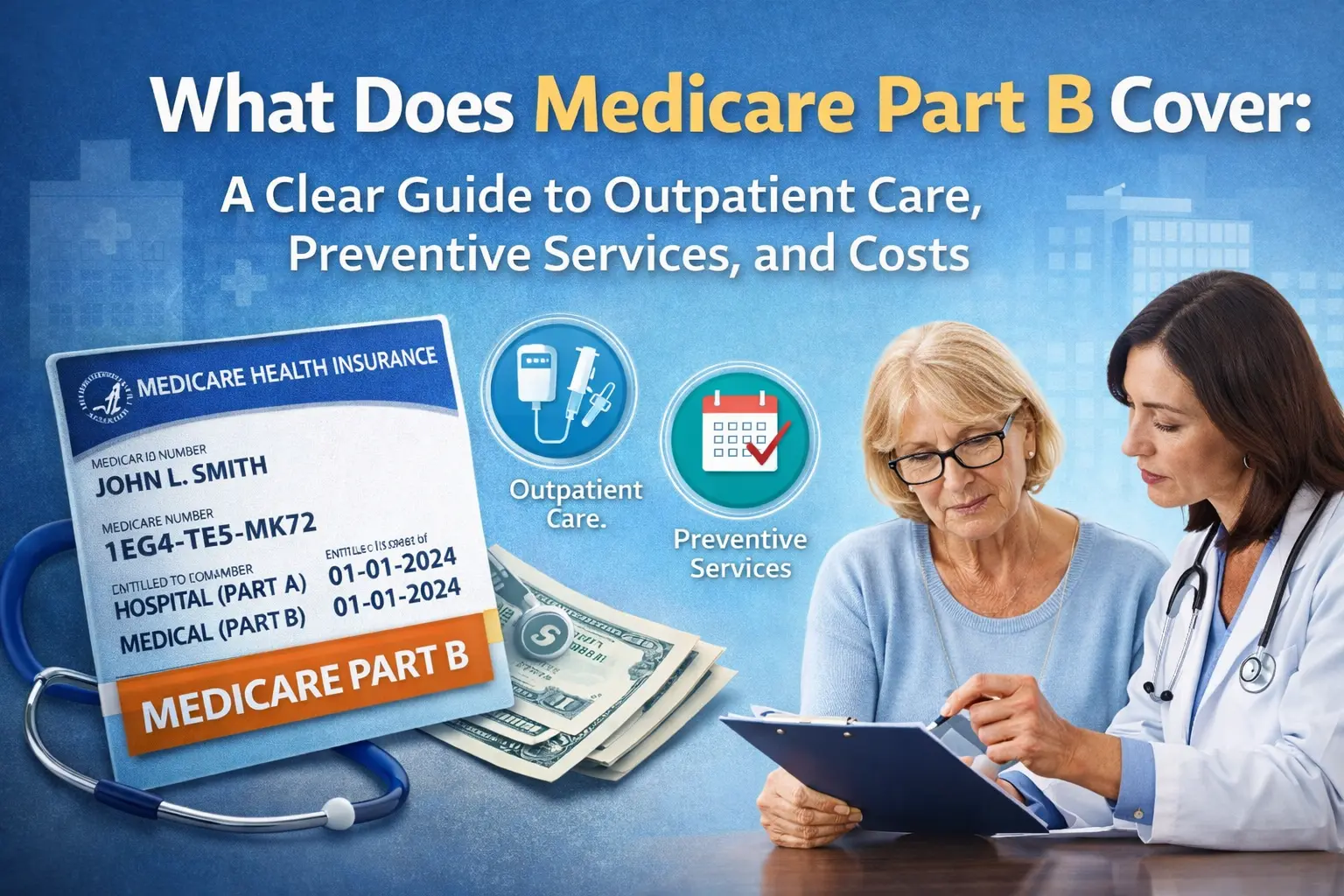
Medicare Part B covers a range of outpatient and medically necessary services for people who are eligible for Medicare. This article explains what those services are, how costs are handled, and common misunderstandings that can affect decisions about care and coverage.
Clear information about Part B helps when planning medical care, comparing supplemental coverage, or preparing for enrollment.
Overview of Medicare Part B
Part B is one component of Original Medicare. While Part A generally covers inpatient hospital care and skilled nursing facility stays, Part B focuses on outpatient care, doctor services, certain supplies, and preventive services.
Enrollment in Part B could be delayed for some people who still have employer coverage, but delaying enrollment without having credible coverage can lead to late-enrollment penalties. Premiums, deductibles, and coinsurance apply, and the specific dollar amounts can change annually.
What Part B covers
Part B pays for medically necessary services and supplies needed to diagnose or treat a medical condition. That includes outpatient visits, diagnostic tests, certain types of therapy, medical equipment, and some outpatient prescription drugs that are administered by a provider.
Preventive services include screenings and counseling intended to detect or prevent illness. Part B typically covers 80% of the Medicare approved amount for many services after the deductible is met, leaving the beneficiary responsible for the remaining share unless additional coverage applies.
Eligibility and Enrollment Basics
Most people become eligible for Medicare Part B when they turn 65, or earlier if they are eligible due to certain disabilities. Enrollment periods include an Initial Enrollment Period around a beneficiary’s 65th birthday, a General Enrollment Period each year for those who missed their initial window, and Special Enrollment Periods for people with qualifying circumstances, such as when leaving employer coverage.
Failure to enroll when eligible and without eligible coverage can lead to a lifetime penalty added to the monthly premium. It helps confirm current enrollment deadlines and rules, as administrative details can change.
Doctor Visits and Outpatient Care
Part B covers a broad set of services delivered outside of inpatient hospital settings. Understanding the distinctions between primare care physician visits, specialty visits, and outpatient procedures clarifies what to expect at the time of billing.
Office Visits and Specialist Care
Routine visits to a primary care physician and specialist visits are generally covered if the services are medically necessary. Coverage includes evaluations, diagnosis, treatment planning, and follow up visits. Mental health services provided in outpatient settings, such as psychotherapy with a certified clinician, are typically included.
When seeing a provider, confirm whether they accept Medicare assignment. Providers who accept assignment agree to the Medicare approved amount and will bill Medicare directly.
Outpatient Surgeries and Hospital Outpatient Services
Surgical procedures performed in outpatient settings or hospital outpatient departments are covered under Part B when they are medically necessary. This might include minor surgeries, endoscopies, ambulatory surgical center procedures, and certain observation services.
Diagnostic tests, imaging, and laboratory services ordered as part of outpatient care are covered under Part B. Ancillary services tied to outpatient procedures, such as anesthesia provided in an outpatient surgery center, are also typically included.
Preventive Services

Medicare Part B includes a suite of preventive services intended to detect disease early or reduce risk factors. Many of these services are fully or partially covered when delivered in accordance with Medicare guidelines.
Annual Wellness Visits and Screenings
Part B covers an annual wellness visit to develop or update a personalized prevention plan. It is not a comprehensive physical but focuses on health risk assessment, screening schedules, and preventive counseling.
Screenings such as mammograms, certain cancer screenings, cardiovascular screenings, and osteoporosis screenings may be covered at specified intervals. Coverage rules often require specific diagnostic codes or clinical indications, so providers and patients should confirm eligibility for each screening.
Vaccinations and Counseling Services
Medicare Part B covers certain vaccines, including influenza and pneumococcal vaccines, as well as the hepatitis B vaccine for those at risk for hepatitis B. Counseling services, such as tobacco cessation counseling for beneficiaries who use tobacco, are also part of the preventive package.
Behavioral health counseling that targets specific risks or conditions may be covered when performed by qualified providers and billed in accordance with Medicare’s criteria.
Durable Medical Equipment
Durable medical equipment (DME) under Part B includes items that a doctor prescribes for use in the home to treat a medical condition. Coverage depends on medical necessity and on the supplier’s contract with Medicare.
Examples of Covered Equipment
Common durable medical equipment covered by Part B include wheelchairs, walkers, hospital beds, oxygen equipment, and certain Continuous Positive Airway Pressure (CPAP) devices. Prosthetic and orthotic devices can also be covered when they are necessary for a beneficiary’s medical treatment.
How Coverage and Suppliers Work
To receive coverage, the equipment typically must be prescribed by a Medicare contracted physician and obtained from a supplier who accepts Medicare assignment. Medicare may pay 80% of the Medicare approved amount after the Part B deductible is met, while the beneficiary is responsible for the remaining 20% unless additional insurance applies.
Suppliers must meet quality and enrollment standards. Using a supplier that is contracted with Medicare helps ensure claims are processed correctly and reduces the risk of unexpected bills.
Costs and Out of Pocket Responsibility
Understanding premiums, deductibles, and coinsurance helps beneficiaries anticipate financial responsibility and decide if supplemental coverage is worthwhile.
Premiums, Deductible, and Coinsurance
Part B has a monthly premium that is increased for those with higher incomes; the amounts for the upcoming year are typically announced by Medicare each November. There is an annual deductible; after meeting it, Medicare generally pays 80% of the Medicare approved amount for many outpatient services, leaving the beneficiary with a 20% coinsurance liability.
How Billing and Secondary Insurance Affect Costs
Providers submit claims to Medicare, which pays its share to the contracted provider. If a provider accepts assignment, he or she must accept Medicare’s approved amount as full payment for covered services, minus any coinsurance or deductible.
Secondary insurance policies, such as Medigap plans or employer sponsored retiree insurance, can help cover deductibles and coinsurance. Medicare Advantage (Part C) is an option that bundles Medicare Parts A and B and often has different cost sharing rules and network restrictions in place.
What Part B Does Not Cover
Knowing exclusions helps prevent surprise bills and guides decisions about additional coverage.
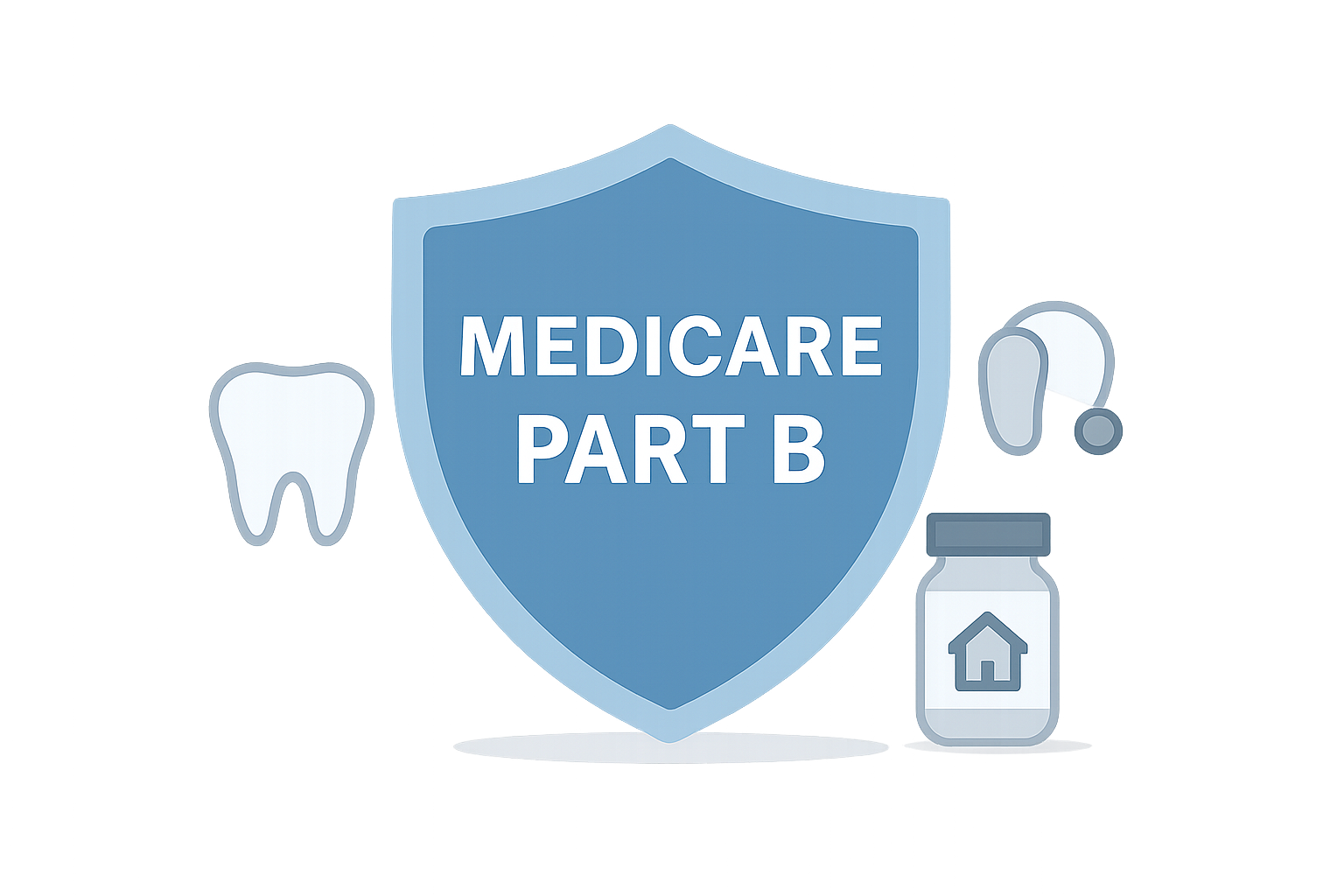
Part B does not cover inpatient hospital stays, long-term custodial care, routine dental care, most hearing aids, or most routine vision care. Outpatient prescription drugs are generally not covered unless they meet specific criteria and are administered by a physician in a clinical setting.
Some services fall under other parts of Medicare or necessitate supplemental policies. For example, prescription medications taken at home are usually covered under Medicare Part D, not Part B.
Common Misconceptions
Misunderstandings about Part B lead to unexpected costs or missed benefits. Clearing up a few common myths helps beneficiaries make informed choices.
A common misconception is that Part B covers all prescriptions. That is not the case; oral medications dispensed at a pharmacy are usually covered under Part D.
Another myth is that Medicare pays the full cost of covered services. Most beneficiaries owe coinsurance or a deductible.
People sometimes assume all doctors will accept a patient who is enrolled in Medicare. Many providers do, but some do not. Confirmin
g this before an appointment helps reduce the chance for an unexpected financial burden.
Finally, some think that preventive services are always free. Many preventive services are covered without coinsurance, but other services tied to evaluation or treatment may generate cost sharing.
Educational Disclaimer
This information is educational and does not constitute medical, legal, or financial advice. Coverage rules, costs, and procedures can change. Confirm specific coverage, rules, and costs with Medicare, an authorized state resource, or a licensed insurance advisor.
Conclusion and Practical Next Steps
To confirm Part B coverage for a specific service, review your Medicare Summary Notice or explanation of benefits, contact 1-800-MEDICARE, or visit the official Medicare website. Speak with your provider’s billing office before receiving care to verify whether the provider accepts Medicare and how billing works.
If you need help comparing supplemental plans, contact your State Health Insurance Assistance Program for free, personalized counseling. Review enrollment periods and keep documentation of employer coverage if you delay Part B. Small steps now can reduce unexpected costs later!